

Massachusetts can show how to resist Trump’s divisive agenda
Across race, class, and identity, communities are already building the coalitions needed to protect rights and push back.
By Lydia Edwards, Gladys Vega, and Leverett Wing
Published in the Boston Globe on April 13, 2026
Lydia Edwards is a Massachusetts state senator. Gladys Vega is president and CEO of La Colaborativa. Leverett Wing is executive director of the Commonwealth Seminar.
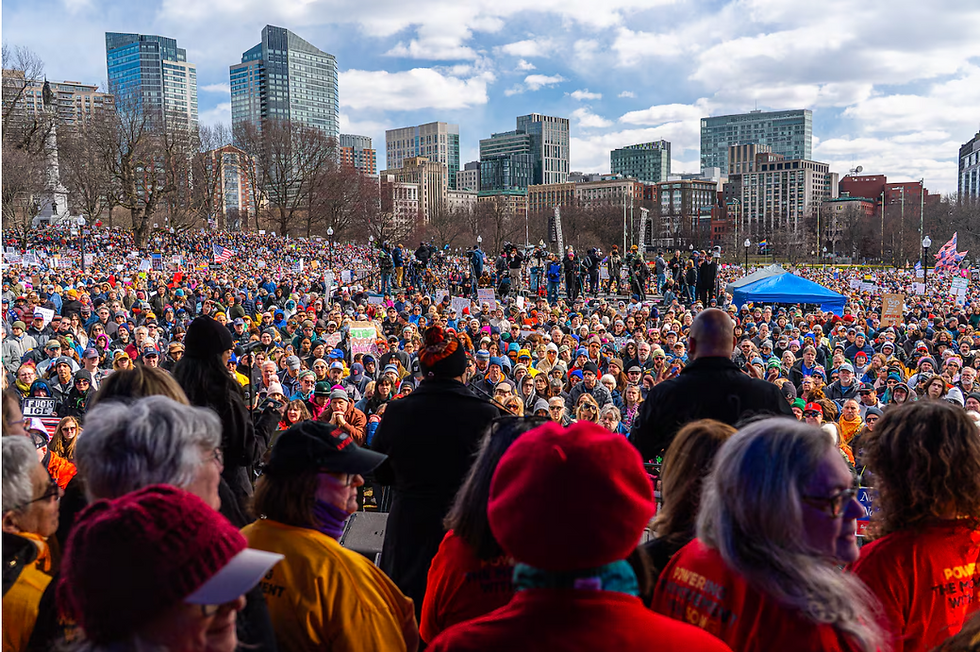
Thousands of protesters gathered for No Kings Day on Boston Common on March 28. Finn Gomez for the Boston Globe.
When President Trump was sworn into office last year, many communities braced for right-wing policies rooted in the extreme Project 2025 agenda. What has transpired since then is the introduction of widespread, often draconian, policies resulting in setbacks to civil rights, the curtailment of how multicultural histories are taught, increased discrimination, and the tearing apart of families through harsh immigration action.
Diverse communities must come together to respond to the administration’s discriminatory policies. Many of the victories our diverse communities have won, from voting rights to education, have been a result of our shared campaigns.
Nationally, Black, Latino, and Asian communities have been utilizing and building upon existing support systems and creating grass-roots networks to protect vulnerable populations. Millions of Americans have participated in the large-scale, peaceful “No Kings” rallies. Local and state governments have initiated “Know Your Rights” campaigns to help residents, especially immigrants and LGBTQ individuals, understand their rights when interacting with law enforcement.
In Los Angeles, the Philipino Workers Center, the Los Angeles Black Worker Center, and the Koreatown Immigrant Workers Alliance have organized low-wage workers of color to oppose Immigration and Customs Enforcement actions and to advocate for their rights. In Chicago, ONE Northside has organized more than 100 diverse institutions and community residents to form rapid-response teams to protect neighbors during ICE raids.
Locally, the Asian Business Empowerment Council, We Are ALX, the Black Economic Council of Massachusetts, and the Massachusetts LGBTQ Chamber of Commerce have joined forces to advance shared policy priorities on economic inclusion for under-resourced small businesses, convening opportunities to connect leaders, align strategies, and advance shared solutions.
The LUCE Immigrant Justice Network of Massachusetts has created a multiracial coalition of residents and more than a dozen community organizations establishing a multilingual hotline to report ICE activities in their communities and by organizing legislative petition drives, phone banks, and rallies. Politically, the Massachusetts Black and Latino Caucus and the Asian Legislative Caucus have prepared joint legislative policies regarding immigration, ICE, and due process to prioritize the unfair treatment and targeting of immigrant residents. Most recently, the House of Representatives passed the PROTECT Act to restrict state/local cooperation with federal civil immigration enforcement.
In addition to these efforts, there should be a campaign to mobilize voters to the polls, such as the efforts that helped turn states like Georgia and Arizona blue in the 2020 election. Supporting more diverse curricula in public schools is also vital. Communities must focus on the next generation of leaders to give them the knowledge and tools required to move our efforts toward equity forward. Passing legislation similar to Minnesota’s ethnic studies mandate requiring inclusive, culturally responsive ethnic studies in public schools will help ensure all Massachusetts elementary and secondary school students learn about our shared histories of successes, struggles, and losses.
Legislators, corporate foundations, and philanthropic donors can also accelerate pipelines for future community leaders by promoting and investing in programs similar to the multiethnic Coalition for Anti-Racism and Equity’s “Leadership Next Gen” initiative, which provides paid fellowships and a program offering classroom training and real-life experience in community-based organizations and legislative offices.
Our communities are interconnected, and we should all join together to fight for and preserve democracy.

