In Historic Event for Racial Justice, A Mass Removal of ‘Dirty Deeds’ is Underway
Legislation streamlines the process to repudiate restrictive covenants and confront the state's history of housing discrimination.

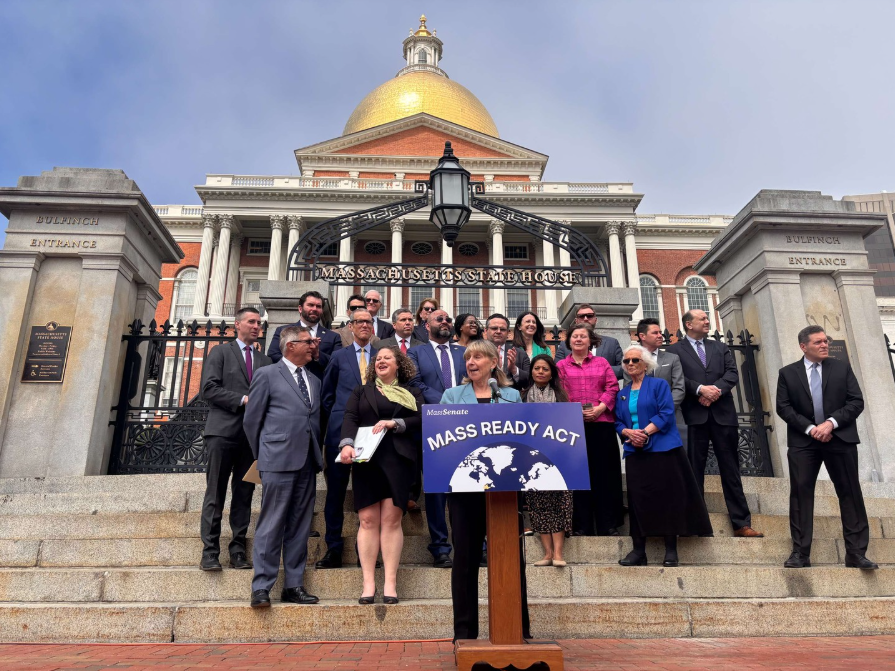
(Beverly, Massachusetts – July 18, 2025) – On Monday, the Southern Essex Registry of Deeds will begin removing Restrictive Covenants (“Dirty Deeds”) from property deeds for free, waiving the $150 fee that usually comes with the procedure. Following a bill filed by Senator Lydia Edwards and Representative Russell Holmes, this event celebrates a massive effort to confront and correct the complicated histories of the Commonwealth.
The filed legislation allows Massachusetts residents to formally remove racist and discriminatory language found in property deeds — referred to as “dirty deeds.” The bill, H.1762/S.1080 – An Act for the removal of void restrictive covenants, creates a statewide process for homeowners to remove these racially restrictive covenants, which were used for centuries to deny housing to various groups including African American families, Jewish families, Irish immigrants, and others. This legislation allows the recorder's offices to issue a new certificate of title or add a memorandum – free of cost. It represents a step forward in confronting the Commonwealth’s history of exclusion, segregation, and systemic racism in housing policy.
“We are excited to begin cleaning the dirty deeds that still contain discriminatory restrictive covenants. It is not enough to say this language is unenforceable; instead, we must ensure the language is discontinued in future deeds so this language remains only as a lesson for us to learn from,” said Register of Deeds, Eileen Duff. “We would not be here today if it were not for the work of Harborlight Homes and the North Shore NAACP that identified the first 600 deeds—as we’ve continued our research, the Southern Essex Registry has now identified approximately 800 dirty deeds. I am so thankful for the support of Senator Lydia Edwards as we embark on this project. I fully support Senator Edwards’ bill, S.1080—An Act for the Removal of Void Restrictive Covenants, so every dirty deed in the Commonwealth is cleaned, and not just those in the Southern Essex District Registry,” said Duff.
Edwards’ legislation streamlines the process of removing such language. By eliminating procedural barriers, the bill empowers homeowners to take action and the Registry of Deeds to offer support.
"This bill is about more than removing outdated language," said Senator Edwards, State Senator for the Third Suffolk District. "It's about educating the public, acknowledging the harm of systemic segregation, and taking intentional action to reject it. If past policy was used to divide and exclude, then our public policy today must be used to repair and affirm. I want to thank Register Eileen Duff for being a champion of this difficult, but necessary work."
“Our bill is about looking history in the face—not denying racism, but admitting it, confronting it, and correcting it,” the Senator added. “At a time when the federal government is pulling back from honest conversations about history, Massachusetts is choosing to lean in.”
“Historically, racial covenants were used to enforce racial segregation and to maintain ‘neighborhood character and protect property values’,” said Representative Russell Holmes, State Representative for the Sixth Suffolk District. “This bill aims to eliminate the craftiness that still exists amongst the property owners who continue to perpetuate the lack of diversity in communities across the Commonwealth.”
The bill is tentatively scheduled to be heard by the Joint Committee on the Judiciary on October 7, during a hearing focused on property-related legislation.
If enacted, the legislation would:
Establish a formal process for homeowners to repudiate discriminatory clauses in their property deeds;
Empower registries of deeds across the Commonwealth to assist in that process;
Recognize that addressing the legacy of segregation requires both symbolic and substantive action.
It would not hold current homeowners accountable or create any cause of action against the homeowner.
Senator Edwards emphasized that the legislation reflects a broader commitment to racial equity in housing and to publicly acknowledging the intentional harms of the past. "Intentional harm demands acknowledgment and intentional repair. This bill is one step in that direction."